Saturday, June 29, 2013

What’s New at Burnham Park?


Well, if you ask about buildings, there are many things that will surprise those who were away from Baguio for a long time. We probably have now the biggest hotel in the city by the name of Crowne Legacy Hotel located at Legarda road just a few steps away from Baguio General Hospital.

But I will reserve those places in another post. For now let us talk about the new things you can find at Burnham Park.

 If you have been going to Imelda Park or Botanical Garden at teachers’ camp to have pictures with the natives there, and to wear igorot costumes at the Mines’ View Park. Well, you will also get the second at BurnHam Park. For a cheap price you can select which costumes to wear then take pictures of yourself, either using your own camera or ask the services of those professional photographers waiting for costumers on the sides.


And the newest attractions are the newly made fountains which were just inaugurated last June 27, 2013. My boss said kept telling me that to explain things better, show them if you can and all the twisting of the tongues and pens will greatly diminished. Thus, let me just show you in these two videos and images I took when I went there last evening.


Tuesday, June 18, 2013

Alis di makan (The traditional practice of food exchanges between I-Sagada and I-Bontoc parents)


One of the things I like in attending wedding feasts, or traditional practices of the Igorots, like the “lab-labi,” or during a wake is the chance to learn about the different culture of the Igorot people which I have not the chance to learn while growing up because my father was not a firm believer to following the traditional practices of his people.

So, one time when I went home to Sagada to attend a wake of a relative of my wife, one of the topics that came out was about “Alis di makan” between the parents of Bontoc and Sagada children who marry.

The man who tried his best to explain it was named Junior Siiten.

When a Bontoc child and I-Sagada child get married, the people from Bontoc cannot eat the food prepared by the Isagada during the feast, until the parents of the I-Sagada child and the Bontoc’s child parents exchange foods. When the “alis di makan” is accomplished, the Bontoc child’s relatives could now eat the I-Sagada prepared food.

The reason of this culture was because the Bontoc people during the old days, when the people of the Mountain Province were not yet Christianized, were engaged in head hunting or “Boso” practice. The Sagada people were peace loving people who believe in a god named Kabunyan, so, they were victims of the barbarous act by the boso people.

There is a belief (based on experience) that when during the wedding, while the “alis di makan” haven’t yet done, anyone from Bontoc who eats in the food prepared will surely die when they go home. On the other hand, when an Isagada go eats in a bontoc wedding feast, he is safe.

Until the Bontoc parents are not doing the tradition, they cannot eat anything serve to them. Thus, when they visit at the home of their child, and the alis di makan was not yet done, they must go out and eat at the restaurant, or at the home of someone from their village. This practice is only applicable to the parents of the I-Bontoc child.


Vocabulary:

Alis di makan = exchange of food practiced by the parents of the peace loving people whose child married
                            to a child of people whose ancestors were practicing head-hunting.

Boso = ferocious people who were engaged in head-hunting during the old days.

I-Sagada = people of Sagada

I-Bontoc = people of Bontoc

Igorot = people of the Mountain Provinces or now called Cordillera regions, thus, they are now generally
              called Cordilleran instead of Igorot.

Lab-labi =  a practice of the Igorot of spending the night at the house of a relative or friend, who butchered
                   animals(usually pigs).  Here they exchange stories to make the night passes-by, while the old
                   men do the ceremonies depending on the reason why the occasion was made.

Sunday, May 26, 2013

Igorot Country: A Missed Opportunity


1.  Citizenship:  Igorot  2.  Country of origin:  Republic of the  Kaigorotan ……. and, so on…..

Well, how do you feel if those are the things you are writing down in every document you are ask to fill up about your identification?
Crazy idea? It’s out of the blue kind of idea, so, maybe. However, I believe this has a merit to talk about that is why I wrote it and let the public say what they think about it, especially, the kakailians who are concerned of their history and identity as IGOROT.

This idea suddenly got into my mind one time when I was thinking about the slowly dimming memory of my Igorot brothers and sisters of the Kaigorotan on who they really are. I can see that the question of who is an igorot  has begun to twist history and slowly pointing to the people of Mountain Province, specially, Sagada and Bontoc, as the only real Igorots. A reason why many Ifugao, and Kalinga are now saying they are not. And the Benguet or Ibaloy have doubts.

As I was contemplating what happened in the recent history of the igorot people, I remembered the heroism of the then Hon.  Congressman Alfredo Lam-en who stood up in congress to announce that the Igorot people are Filipino people- in response to Carlos P. Romulo’s claim that the Igorot people are not Filipino.

According to the story I heard, Romulo declared that the Igorot people in KAIGOROTAN were not Filipino. He did not expect that a handsome figure stood up in defense of the Igorot.  Dressed in full Igorot attire, and looks very civilized which is contrary to what he read from books and stories he heard( I believed Romulo never saw or still do not know who are the Igorot before the time he announced what he thought; I also guess that Apo Gayagay was the first Igorot he saw in personal). The figure as we know was Mr. Lam-en who told him face to face, and to the entire nation of the Philippines that the Igorot people are Filipino.

As I was analyzing the good and bad thing the move effected on us, I realized that an opportunity has been missed.  A very, very rare opportunity which I believed will never occur again, unless we ourselves create it.

But how can we create the opportunity when we are now starting to disdain our identity as IGOROT?

This reality bothers me much.  I dread the thought that one day we no longer have an identity of our own!  And each time I think of it, I cringed about Mr. Lam-en’s not giving more thought about the challenged posted by an“ ignorant” pundit named Romulo.

He could have challenged him by admitting the charge, and said, “Yes, the IGOROT people are not Filipino.  They are IGOROT, period!  And since they are not Filipino, they therefore have the right to declare that the whole of KAIGOROTAN- Kalinga-Apayao, Ifugao, Bontoc, and Benguet shall be known as the REPUBLIC OF KAIGOROTAN”.  Also, any part of Ilocos region where the Bago  are living.


Yes, that’s it, a country of our own- and, why not?  We have our own dialect or language, culture, tradition, and other requirements to make-up a nation!  So, instead of him at that time arguing against Romulo, he should have agreed with him; however, at the same time he demanded our freedom using the statement of Romulo as the thesis.  He could have asked the igorot people to support him and led them to rally for their freedom from the Philippine government.

If we have a country of our own, then the identity crisis we are going through now could not be happening! But since we missed the opportunity, then we must have to do our best to keep our identity-by educating our brothers and sisters about the roots of our forefathers and make sure the next generation will learn it.

And, who knows, there will be another Carlos P. Romulo who will again declare the Igorot people are not Filipino, and probably, the next Gayagay will be wiser enough to say “Yes, we are not Filipino; we are IGOROT-and the name of our country is KAIGOROTAN:  REPUBLIC OF THE KAIGOROTAN


Sunday, April 28, 2013

Patpatayan (The Holy Ground of people from Sagada)


Figure 1. This the Patpatayan(the holy ground of Sagada) which is found in Dagdag.


One of the things that makes Sagada very interesting is it has its own holy Ground where people do their rituals called begnas every year.

The place is holy that no one is allowed to desecrate and cut the trees on the area.  The first time I heard about patpatayan from my cousins,  I had no idea what was it.  They pointed the place and I saw a big tree, so, I thought the tree is the one that is sacred and is the one called patpatayan tree.  However, someone explained that the patpatayan is the place or ground and the tree is just part of that place but serving as a marker.  Since, it's part of the place, the tree is also considered holy, thus, no one is allowed to cut it.  When I went to visit the ground last year, the tree was an old pine tree with two or three more other trees standing on its side. 

For tourists who are going to Sagada this place is worth investigating.  Ask about the different kinds of Begnas performed there every year.  Here are about five begnas being performed according to my aunt and brother-in-law whom I asked.  These are the Begnas di dook or Tiagew(which is done on summer usually on March to signal the start of building houses), Begnas di babayas(to close weddings on the month of December), Begnas di latab(to close weddings on the months of April-May), Begnas di Yabyab(usually done on the month of October or November before the planting season on that time),  Begnas di Tangeb di lakat which is done after the harvest.  Every Begnas celebrated the people, headed by the elder of the dap-ay who hosted the begnas, will go to the patpatayan to butcher pig and perform rituals thanking the Anitos for the blessings the village received. 

During this celebration, no one is allowed to go to work or do anything else because it is considered a holy day. 

But how does the patpatayan looks like, and is this found only in Sagada?  Well, I thought Sagada is the only place doing the ritual, but in my place where I am living now, I was amazed to learn that the Igorots(came from Sagada) here also have their own patpatayan or holy place.  You can find this place at San Vicente, Baguio City, a neighbor of Camp 8, Puliwes.  It was instituted by Lakay Bayoya when he was alive and the ritual is still being observed by the pure igorots of the place.

How is a place chosen as a holy ground?  According to Mr.  Daluyen, who revealed to me about the presence of patpatayan here at San Vicente, the place is not just designated as a holy ground but is chosen based on signs, especially, a bird and other things the elder considered as a manifestation of holiness of the place.  He said, we were lucky that the place is located just in the neighborhood, or else it may be located miles away.

For more information about begnas I recommend the reader read Mr. Allad-iw’s post on the subject Sagada begnas: A ritual ofthanksgiving.


So, in case you're wondering what you'll see there, here are some images of patpatayan:

Figure 2.   


 Figure 3.
   

 Figure 4.                                                     
 

                                                   Figure 5.


Figures 4-5 is the patpatayan place found at San Vicente, Baguio City.


Friday, January 25, 2013

Burnham Park’s Update


Well, well, it’s faster than I thought.  The Burnham Park Lake is now being flooded to be ready to serve the public.  Yah, I went there this afternoon(January 25) to see what’s happening and I was amazed the renovation and cleaning of the mud was all done.  In fact Three days ago, I intentionally passed by very early in the morning, and I saw three backhoes working together to remove the mountain of mud they scraped from the floor of the lake.  Two backhoes were pushing the mud near to the third backhoe who was loading it into a dump truck.

I was thinking that it may take them about a month to finish everything, but barely a week passed and they are now putting water in the lake.  Then I remember, they triple to finish everything and be ready for the coming celebration of the Panagbenga this month of February.

To give you a better view and clearer picture of what is happening I took some images of the lake and around the park to give a wider picture of preparation the city of Baguio is doing to prepare the park for the coming 2013 Panagbenga.


Figure 1.  Non-stop machine working                              


This is my kid who went to visit the lake a week ago.


Figure 2.  Water pipes ready to bring water to the lake

These water pipes are connected to the water district outlets and are ready to bring water to the lake.


                                                                                              Figure 3. 


One of the pipes is already working to fill up the lake with water.


Figure 4.  I wonder how many hours needed to completely fill up the lake


                                          Figure 5.  Testing the waters
One of the boatmen with boating business at the lake maneuvers his
 boat 


Figure 6.  The victim

While everyone must be happy about the renovation and uplifting of the lake, these fishes must have seen something was fishy about the project even before it was started - they knew they will never live to benefit from it.


                                                                                       Figure 7.  One side only parking?
Nope.  These jeepneys are caught in a traffic jam.


Figure 8.  Please, fall in line                                                                              
Jeepneys queue due to traffic from end to end.


Figure  9.  Machine and human workers busy working


Men preparing the road to be ready, I believe, for the fast coming Panagbenga. Is this a caused for the traffic jam? I think it contributed but it's not the major reason.


Figure 10.  Another angle view of the lake


Figure  11.  G-d blesses you men for making our park's road better


Figure  12.  Oooopppsss, please, throw your garbage on the proper place


Figure  13.  Should I repeat what it says


Figure 14.  Businessmen are busy?


                                                                                                       Figure 15.  Emergency numbers


Figure 16.  People in the park

People love parks, but, I can't guess how many cares.


Monday, January 21, 2013

The Dap-ay of Sagada


One of the things that are very interesting to see in Sagada are the Dap-ays.  However, it seems that tourists, especially the locals are not attracted to them because, probably, they just look at them as simply as little houses that have no remarkable things to learn about.

Conversely, I cannot blame the tourists if their attention is not drawn into those small houses in the middle of the villages, unless they have a very inspective nature about things unusual in a place.  Furthermore, the guides may not be talking about those little houses because they are only interested to showcase the natural beauty of Sagada which are already known outside like, the Sumaguing cave, Lumiang cave, the hanging coffins, and other beautiful naturally made spots. 

What is the dap-ay and what are things tourists should know about it?

A dap-ay is a dwelling build especially for unmarried boys. Every village are supposed to have a dap-ay. However, most are found in Demang which have seven, there are five in Dagdag, one in Ambassing, and One in Patay. According to the people whom I asked, the nearest dap-ay to their home is the dap-ay where they belong.  Each dap-ay has its own "Bishop" or an old man being respected by the village.

The Dap-ay has two divisions.  One is the outside or front-yard where a fire burns and serves as light until everyone goes inside the house to sleep.  Then early in the morning the fire is again rekindled to keep the people warm.  The floor is made up of large flat stones put much closed to each other for a size of about 8-10 feet across.  Around it are stones put up in upright position serving as backrests.   The other part of the dap-ay is the little house that serves as a sleeping room.  Only the boys sleep in the dap-ay.  


The dap-ay plays a very important role in the people of Sagada’s lives.   One of the role played, especially in the old days, was it serves as a learning place for the growing boys of the village. The elders went there at night to exchange stories about current events, or experiences they had, and what they perceive about the future, or opinion about a present unrelenting issue. The youths listening from those stories gained wisdom from them.  It is from the dap-ay that they are molded to become real matured men – men who are responsible, who will be ready to face the challenges of life.
 In the dap-ay, little boys also started to learn the skills of doing masahe(massage), gisgisto(slightly digging the thumbnails on the skin of the head), dagdagay(scratching the bottom of the foot using the ends of a pair of  sticks) and other techniques of making the body relaxed, or treat a lingering pain like backpain, headaches, and fatigue from the days’ works.

The dap-ay also serves as a courthouse of the village.  When there are issues or problems in the village, the elders will meet at the dap-ay to talk about what to do in solving the problem. 

Are dap-ays found only in Sagada?

 Dap-ays are also found in other parts of the cordillera.  But these days, the looks are already different from the old architecture designs.  Before, the roof of the house was covered with cogon and the walls were made up of stones, while today the roof is made up of galvanized irons.

Figure 1.  The dap-ay of Demang, Sagada 


This is the modern look of dap-ays today. Its roof is made up of galvanized iron


It is a pity that as the economic level of the people upgraded; the boys are no longer going into the dap-ay to sleep at night.  They no longer hear stories about their past histories.  The youth of today are no longer knowledgeable about their roots, and do not know the traditional practices, and culture of their forefathers.   


Figure 2. The frontyard of the dap-ay 


To know more about the interesting stories of the dap-ay, I suggest that tourists should ask their guides to bring them to one of the dap-ays and have them tell them about the significance of this into the life and culture of the people.

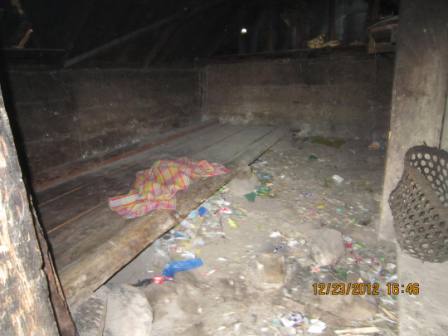
Figure  3.  Inside look of the dap-ay                                                               


The inside indicates that the place is not being used very much today.  There is only one blanket, no signs of bonfire for a long time, and the place is filthy.


Figure 4.  Pikong dap-ay(front view)                                                                                                         


Figure 5. Pikong dap-ay(backview)