Showing posts with label igorot culture. Show all posts

Monday, March 30, 2015

Igorot Children Should Know Their Forefathers have Tails


We attended a wedding of a cousin’s child who married “outside the house.” It means the child married a child of another “tribe.” It is not Igorot, thus she has another belief, tradition and culture.

For us it is perfectly right because we also want to know others’ culture.

Few decades ago, marrying outside the tribe was not that easy and usually parents dictate what their child should marry. Almost everything parents and elders say were treated like it’s the law.

However, today is a different story, I believed characters and attitudes of people changed very fast that almost no one had even noticed the big change.

Back to the marriage topic, it is amazing to see and know others’ culture and tradition in celebrating their weddings. Their dances and kinds of programs are completely different from our own Igorot tradition and culture.

Theirs is with bands and singers performing. For good luck and to raise funds for the new couple to start with, the newlywed were asked to dance to a love song while their relatives, sponsors, friends, and visitors pin cash to hang on their dress; in addition, some boxes containing food(lechon manok or grilled chicken) and drinks were sold through bidding. A bidder can get a lady from one of the visitors to dance with and others will try to outbid him until the seller-announcer put a maximum price for the box then end the bidding. There were about ten boxes sold in my opinion and to show our support we bought one. There were also other side shows we didn’t notice because they were done a distance from us, and a slightly hidden from the decorations. The main part of the program everybody likes is for the visitors, especially, youth to spend the night dancing together with the music they like to play using today’s latest technology.

Well, we are normal people so we compared our native practice to theirs and we look at theirs as somewhat “Showy” specially the pinning of money in the dress.

Of course we did not want to be outdone; we also presented our own native music and dance using the gongs as our own music instrument during wedding festivities. Also, we fall in line and gave our own financial contribution to the couple while they are sitting in their chair( We don’t like to be showy so we didn’t pin the bills in their garments). This way we have a chance to know them more and congratulate them and they have the chance to see us face to face, specially, relatives whom they see for the first time.


The celebration went well to their plans, I believed, because all the scheduled programs were done before an hour before midnight, thus, it’s a free for all dancing and drinking for those who wanted to remain through the night.

But there was one thing I observed during the wedding. While our women were wearing their traditional colorful dresses, not even one of us men was using a sign of our own being an Igorot - the G-string. The reason was obvious, our own traditional native outfit is no longer “suitable” in today’s modern kind of culture, because if we use our own G-strings outside our home we might be called as “still barbarians or uncivilized” or any names that will diminish our pride. Really?

And this is what the title is all about. Because of our native attire in the old days the people in the lowlands believed Igorots have tails. I believed someone explained or probably joked to them our G-string attire as “like tails” behind our butts - and either the listeners took it literally or made joke about it until it was believed as true story.

In fact, until now there are still ignorant people who do not know how a genuine Igorot looks like. There are many of them asking people who visited Kaigorotan (specially, Baguio City) if they have seen an Igorot and how do an Igorot looks like. The irony is the person they’re asking the question is a pure blooded Igorot.

Okay, sorry for telling side stories, but what I mean in the title is that, because it is now seldom Igorot men use their traditional custom attires it will not be long and the next Igorot generation will forget one of the important piece of their history is that their forefathers was known to have tails.

For this to not happen, Igorot men should make it a point to always wear their attire on every occasion so that today’s children and the next generation know our forefathers have tails.

Friday, November 14, 2014

Badge of Honor


Figure 1 -
Two horns of carabaos and one horn of a cow.  The practice of hanging horns is a way of rich Igorot families showing they have married off a child.


I took the image from a cousin’s display outside their home. Usually these horns of carabaos are displayed next to the door of a home of people who had children got married.

So, the more horns you see the more children got married.

I don’t think this is part of Igorot’s tradition but I guess it serves as a badge to show not only how many children they married off but also their status in life. Usually only the wealthy families can afford to butcher Cows, and carabaos aside from the 11 pigs for the wedding of their children.

Igorot weddings usually lasts for three days where people of the village especially friends even from distant places, and family members go to eat and congratulate the newlywed and their parents.

Well, people not only go there to eat, but most will give a cash or gifts to the married couple.

If you’re just a visitor, no problem, you can always go and fall in line or ask for food during meal time, they’re happy to give you. So, if it happens that one day you visited Sagada or other parts of Kaigorotan Country(Cordillera) don’t hesitate to partake with the wedding feast.


And more importantly, if you happened to passed by a home having horns hanging in front of their home, usually, next to their door, don’t be scared. You’re seeing a badge or badges of honor they already married off a child or more depending on the number of their children.

And, usually, when you see horns there might be pig’s skulls next to it or in other parts of the house. Don’t worry, it’s not a haunted house or home of a witch you are looking at. The skulls of pigs almost represent the same, however, it might be from doing other traditions done before, like, building a house, wedding, or other traditions where a pig is needed.

Thursday, August 22, 2013

The Tribal War: A Headhunting Story Told by an Artist’s Art at Melvin Jones, Burnham Park


I found this story told in a series of images made by an artist as a decoration on the sides of an old stage found at the Melvin Jones at Burnham Park, Baguio city, Philippines. The carved images are already old and one can see the images are not being taken care of as grasses, dirt and dusts covered them. People seem do not know the significance of such art in the history of the Igorot people of my place of origin – Kaigorotan country, or locally known as the Cordillera region. If that’s in Israel, I believe everyday tourists are there gathered around listening to their guides, or students listening to the lectures of their teachers.


The first scene of the story, showed a man found without a head. On the scene, one man is raising his hands which show he must be shouting for revenge. While two people bowed their head which could signify they are grieving for the loss of a brother or member of a family or a friend.

Fig.  1. A headless body is found. The right side shows a clearer picture of the body


The scene followed by a picture of two men carrying the headless body that was positioned like a fetus. The hands and legs are bent and tied, so that, a long pole made up of wood or probably a hard bamboo pole was inserted between the legs and between the tied hands; the two men carried the body by putting the ends of the pole on their shoulders while a man is walking ahead and third man was following them; the others might have walked ahead already to warn the village about a dead member being brought home. In this case, a ritual is done before any corpse is entered inside the village.


Figure  2.  The headless body is now brought home


The next picture shows the men of the village, lead by their elders, had a meeting with all their men to decide what they have to do. In this case, they decided to take revenge as proven by the next image.

Figure 3.  The men decide what to do


The next scene is showing the men marching to war.

Figure  4.  Going to war


The next image is showing them to have reached the entrance of the village of the culprits. In the image, we can see the people presenting peace offerings as shown by two people on their knees while bowing their heads; one is doing the negotiations. The invading party tried to listen as demonstrated by the others sitting on their knees.

Figure  5.  Negotiations


However, it is clear the invading party did not accept the peace offerings, as a gruesome image of killings shown by the next scene.


Figure 6.  The negotiations failed, so, war errupted

As a result of every war, the children and women are the parties most affected by it. Here we can see mothers with their children fleeing away from the fight, while one woman in the picture is probably helping her wounded son or husband.

Children and women fleeing the for their lives


Related stories: Art of Traditions, Culture and Life of the Igorots Found at Burnham Park(Part 1)

Art of Traditions, Culture and Life of the Igorots Found at Burnham Park (Part 2)

This story is true. I heard the same stories, since I was a kid, from my father and old men from Mountain Province. My father always told us about how the people of the old days were living in war. And how head hunting was rampant because it was part of some tribes culture and tradition. Men who reached the age of manhood go hunting for head and bring it home to their village to show they were real men or had already reached manhood. Others do it for the joy of doing it.


Wednesday, July 31, 2013

Art of Traditions, Culture and Life of the Igorots Found at Burnham Park (Part 2)


On the other side of the structure, it shows the traditional source of living of the Igorot people and their kinds of works.

Agamang(storage room)
Designed like a little house if it was built outside the house to store rice grains not yet pounded but ready to remove the husks. This is no longer found since houses became large nowadays and people no longer need to store rice harvests. Rice millers already does the job of removing the shells of the grains of rice.


Rice terraces
Farming is one of the major sources of food of the Igorots as depicted by the rice fields they made at the steep sides of the mountains creating a “Step-like views.” This can still be seen in Sagada, and neighboring villages, but the most famous is the Banawe rice terraces.


Bayo(Pounding of rice)
One can see a woman holding rounded piece of wood and a lusong(either made up of stone or trunk of wood with a chiseled hole at the center) in front of her. This is the old time way to husk or removing the skin of grains of rice. Two people can do the work by alternating in striking the hole of the lusong to remove the husks of the rice grains inside.


Abe’/abel(waving)
This was the old time manual practice of making warm blankets, sweaters, bakget for women, bahag(G-string) for men, using specially made pieces of wood. Some are still doing this method and it requires great skill, and more than patience. This is picture by the woman sitting with a long material in front of her.


Wood Carving
The Igorots are also very good in wood carving and the people of Ifugao are the most prolific about it.


As shown by the other images, man and woman are gathering sweet potatoes. The sweet potatoes also make up one of their major food.


Another image also illustrates the way people carry their food as shown by a woman carrying a waved basket hanging on her forehead.


The kind of houses is also shown which roof is made up of cogon grass. Mostly the house already has in it the agamang as describe in number one.


Did you read part 1 of Art of Traditions, Culture and Life of the Igorots Found at Burnham Park (Part 1)

Tuesday, July 30, 2013

Art of Traditions, Culture and Life of the Igorots Found at Burnham Park (Part 1)


While I was busy taking pictures around the pool of Burnham Park, I came across a familiar spot I used to see when I was doing my morning exercise 20 years ago.

As I was looking into the carved images on a block cemented structure, I realized for the first time that those are images depicting traditional practices of the Igorot people. Some of them, though, are no longer practiced thus making this carved stone more interesting and important sign or marker because of the historical value it is trying to communicate to people. It is a treasure that needs to be preserved or copied more elsewhere for the next generation.

Thousands of local tourists are walking around the park but are only interested in watching the boats floating on the pool of water at the center as the main attraction and enjoying the beautiful flowers carefully tended by the gardeners. Each time they reach one of the corners of the path traversing the pool, there is no way they will miss to see the 2 x 3 square meters and colored black marker. They may appreciate the art of images carved into the stone, but no longer go further than that. When I was going there, as I said to do my rounds of stretching years ago, I never connected to the meaning of those images. I only look at them as some showcase of the ingenuity of some Igorot artists.

But now all that thinking changed. My admiration to the brain of putting that marker went up high and the way I admire those images also became more than just an appreciation to the artists who carved them there.

If one looked very close to the images, here are the things that could be seen, and for those who knew their pasts, each set of image has its own story of history to tell. Every tourist’s guide should learn them and make the visits of those tourists not only enjoyable but also more meaningful and memorable. I hope that my explanations here will be sufficed to give an idea what are those images all about.

Let me start on the left side when one is facing the pool where the boats are:

1. Kalaleng(float)
The image shows two men playing float to produce different sounds of music depending on how the players want to convey their feelings. Float is usually played by people who go to the forests to gather wood, tending animals, working the farm and gardens as their pass time. The instrument was usually made up from bamboo grass. Today, it is no longer a common thing.


2. Dawis – Comes close to grilling but only to remove the hair and outermost skin of the animal - in the image is shown as a pig - the animal commonly used in doing rituals.
Illustrated by men holding a pig on its legs. They’re holding it over burning firewood to remove the hairs, and outer most skin before it is butchered. It was the common way of removing a pig’s hair before it is butchered; however, today a torch fired by gas replaced the firewood


3. Sangadil This was the traditional way of caring the dead for the belief that its spirit was still mingling with the people mourning its body. The last time I saw a picture of this practice done was on 2008. The remains of the dead is held sitting on a chair made up of wood. My wife’s grandfather on her father side was the last one in Demang Sagada that the practice was done.


4. Skeletal heads of animal
This is a common practice of the people to hang the skulls of animals butchered on their walls.


5. War Dance
Depicted by the image where one is holding up a spear and opposite him is one holding a machete. Both players are holding Kalasag(armor) made up of wood to protect their selves. It is done while the gangsa is played.


6. Opening the Gusi with Tapey
Two men are opening the gusi(clay jar) and are going to get the tapey (rice wine) to drink. This practice is usually done during occasions, such as marriage, and many more rituals. One of the old belief about opening tapey jars was when a child open the jar and eat from it, he will be tearing on his eyes. Thus, they should only drink from tapey wine opened by an old man.


7. Gangsa(Gongs)
A traditional music instrument of the Igorots using gongs made up of brass. Most Igorots use the gongs to celebrate weddings, happenings, and other rituals; however, one tribe, the Ibalois use it at the wake of their dead.


8. Tayaw(dancing with feet alternately stepping on the ground with the hands emulating a flying bird)
A traditional dance of the Igorots as depicted by a woman and man’s stretched hands and arms. This dance is done in unison to the sounds of the gongs played by men and is performed mostly during weddings and other times during occasions.


9. Tambor(Drum)
Also played together with the gongs for particular kinds of dance such as the Takik. Made up of a long hollowed wood where one end is covered with animal dried skin.


10. Pinikpikan(Usually call by others as “Killing me softly”)
As depicted by the man holding a chicken on its feet upside down, while hitting it with a stick to let the blood curdles under the skins. This is one of the favorite delicacies of the Igorot people.


11. On both sides of the structure are people sitting down with their knees bend and hands wrapped around it. This one depicts the practice during the old times how people sit because there were no chairs, and also depicts the way elders sit in front of their dapuan(cooking place where three stones are placed in triangular positions) to warm themselves.


Don't miss Part 2 of Art of Traditions, Culture and Life of the Igorots Found at Burnham Park

Tuesday, June 18, 2013

Alis di makan (The traditional practice of food exchanges between I-Sagada and I-Bontoc parents)


One of the things I like in attending wedding feasts, or traditional practices of the Igorots, like the “lab-labi,” or during a wake is the chance to learn about the different culture of the Igorot people which I have not the chance to learn while growing up because my father was not a firm believer to following the traditional practices of his people.

So, one time when I went home to Sagada to attend a wake of a relative of my wife, one of the topics that came out was about “Alis di makan” between the parents of Bontoc and Sagada children who marry.

The man who tried his best to explain it was named Junior Siiten.

When a Bontoc child and I-Sagada child get married, the people from Bontoc cannot eat the food prepared by the Isagada during the feast, until the parents of the I-Sagada child and the Bontoc’s child parents exchange foods. When the “alis di makan” is accomplished, the Bontoc child’s relatives could now eat the I-Sagada prepared food.

The reason of this culture was because the Bontoc people during the old days, when the people of the Mountain Province were not yet Christianized, were engaged in head hunting or “Boso” practice. The Sagada people were peace loving people who believe in a god named Kabunyan, so, they were victims of the barbarous act by the boso people.

There is a belief (based on experience) that when during the wedding, while the “alis di makan” haven’t yet done, anyone from Bontoc who eats in the food prepared will surely die when they go home. On the other hand, when an Isagada go eats in a bontoc wedding feast, he is safe.

Until the Bontoc parents are not doing the tradition, they cannot eat anything serve to them. Thus, when they visit at the home of their child, and the alis di makan was not yet done, they must go out and eat at the restaurant, or at the home of someone from their village. This practice is only applicable to the parents of the I-Bontoc child.


Vocabulary:

Alis di makan = exchange of food practiced by the parents of the peace loving people whose child married
                            to a child of people whose ancestors were practicing head-hunting.

Boso = ferocious people who were engaged in head-hunting during the old days.

I-Sagada = people of Sagada

I-Bontoc = people of Bontoc

Igorot = people of the Mountain Provinces or now called Cordillera regions, thus, they are now generally
              called Cordilleran instead of Igorot.

Lab-labi =  a practice of the Igorot of spending the night at the house of a relative or friend, who butchered
                   animals(usually pigs).  Here they exchange stories to make the night passes-by, while the old
                   men do the ceremonies depending on the reason why the occasion was made.

Sunday, April 28, 2013

Patpatayan (The Holy Ground of people from Sagada)


Figure 1. This the Patpatayan(the holy ground of Sagada) which is found in Dagdag.


One of the things that makes Sagada very interesting is it has its own holy Ground where people do their rituals called begnas every year.

The place is holy that no one is allowed to desecrate and cut the trees on the area.  The first time I heard about patpatayan from my cousins,  I had no idea what was it.  They pointed the place and I saw a big tree, so, I thought the tree is the one that is sacred and is the one called patpatayan tree.  However, someone explained that the patpatayan is the place or ground and the tree is just part of that place but serving as a marker.  Since, it's part of the place, the tree is also considered holy, thus, no one is allowed to cut it.  When I went to visit the ground last year, the tree was an old pine tree with two or three more other trees standing on its side. 

For tourists who are going to Sagada this place is worth investigating.  Ask about the different kinds of Begnas performed there every year.  Here are about five begnas being performed according to my aunt and brother-in-law whom I asked.  These are the Begnas di dook or Tiagew(which is done on summer usually on March to signal the start of building houses), Begnas di babayas(to close weddings on the month of December), Begnas di latab(to close weddings on the months of April-May), Begnas di Yabyab(usually done on the month of October or November before the planting season on that time),  Begnas di Tangeb di lakat which is done after the harvest.  Every Begnas celebrated the people, headed by the elder of the dap-ay who hosted the begnas, will go to the patpatayan to butcher pig and perform rituals thanking the Anitos for the blessings the village received. 

During this celebration, no one is allowed to go to work or do anything else because it is considered a holy day. 

But how does the patpatayan looks like, and is this found only in Sagada?  Well, I thought Sagada is the only place doing the ritual, but in my place where I am living now, I was amazed to learn that the Igorots(came from Sagada) here also have their own patpatayan or holy place.  You can find this place at San Vicente, Baguio City, a neighbor of Camp 8, Puliwes.  It was instituted by Lakay Bayoya when he was alive and the ritual is still being observed by the pure igorots of the place.

How is a place chosen as a holy ground?  According to Mr.  Daluyen, who revealed to me about the presence of patpatayan here at San Vicente, the place is not just designated as a holy ground but is chosen based on signs, especially, a bird and other things the elder considered as a manifestation of holiness of the place.  He said, we were lucky that the place is located just in the neighborhood, or else it may be located miles away.

For more information about begnas I recommend the reader read Mr. Allad-iw’s post on the subject Sagada begnas: A ritual ofthanksgiving.


So, in case you're wondering what you'll see there, here are some images of patpatayan:

Figure 2.   


 Figure 3.
   

 Figure 4.                                                     
 

                                                   Figure 5.


Figures 4-5 is the patpatayan place found at San Vicente, Baguio City.


Monday, January 21, 2013

The Dap-ay of Sagada


One of the things that are very interesting to see in Sagada are the Dap-ays.  However, it seems that tourists, especially the locals are not attracted to them because, probably, they just look at them as simply as little houses that have no remarkable things to learn about.

Conversely, I cannot blame the tourists if their attention is not drawn into those small houses in the middle of the villages, unless they have a very inspective nature about things unusual in a place.  Furthermore, the guides may not be talking about those little houses because they are only interested to showcase the natural beauty of Sagada which are already known outside like, the Sumaguing cave, Lumiang cave, the hanging coffins, and other beautiful naturally made spots. 

What is the dap-ay and what are things tourists should know about it?

A dap-ay is a dwelling build especially for unmarried boys. Every village are supposed to have a dap-ay. However, most are found in Demang which have seven, there are five in Dagdag, one in Ambassing, and One in Patay. According to the people whom I asked, the nearest dap-ay to their home is the dap-ay where they belong.  Each dap-ay has its own "Bishop" or an old man being respected by the village.

The Dap-ay has two divisions.  One is the outside or front-yard where a fire burns and serves as light until everyone goes inside the house to sleep.  Then early in the morning the fire is again rekindled to keep the people warm.  The floor is made up of large flat stones put much closed to each other for a size of about 8-10 feet across.  Around it are stones put up in upright position serving as backrests.   The other part of the dap-ay is the little house that serves as a sleeping room.  Only the boys sleep in the dap-ay.  


The dap-ay plays a very important role in the people of Sagada’s lives.   One of the role played, especially in the old days, was it serves as a learning place for the growing boys of the village. The elders went there at night to exchange stories about current events, or experiences they had, and what they perceive about the future, or opinion about a present unrelenting issue. The youths listening from those stories gained wisdom from them.  It is from the dap-ay that they are molded to become real matured men – men who are responsible, who will be ready to face the challenges of life.
 In the dap-ay, little boys also started to learn the skills of doing masahe(massage), gisgisto(slightly digging the thumbnails on the skin of the head), dagdagay(scratching the bottom of the foot using the ends of a pair of  sticks) and other techniques of making the body relaxed, or treat a lingering pain like backpain, headaches, and fatigue from the days’ works.

The dap-ay also serves as a courthouse of the village.  When there are issues or problems in the village, the elders will meet at the dap-ay to talk about what to do in solving the problem. 

Are dap-ays found only in Sagada?

 Dap-ays are also found in other parts of the cordillera.  But these days, the looks are already different from the old architecture designs.  Before, the roof of the house was covered with cogon and the walls were made up of stones, while today the roof is made up of galvanized irons.

Figure 1.  The dap-ay of Demang, Sagada 


This is the modern look of dap-ays today. Its roof is made up of galvanized iron


It is a pity that as the economic level of the people upgraded; the boys are no longer going into the dap-ay to sleep at night.  They no longer hear stories about their past histories.  The youth of today are no longer knowledgeable about their roots, and do not know the traditional practices, and culture of their forefathers.   


Figure 2. The frontyard of the dap-ay 


To know more about the interesting stories of the dap-ay, I suggest that tourists should ask their guides to bring them to one of the dap-ays and have them tell them about the significance of this into the life and culture of the people.

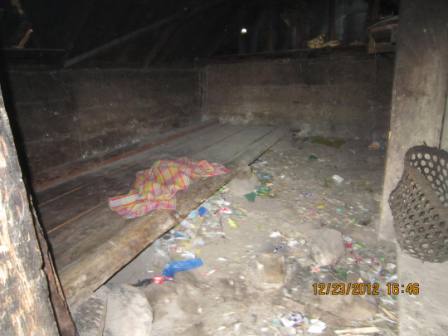
Figure  3.  Inside look of the dap-ay                                                               


The inside indicates that the place is not being used very much today.  There is only one blanket, no signs of bonfire for a long time, and the place is filthy.


Figure 4.  Pikong dap-ay(front view)                                                                                                         


Figure 5. Pikong dap-ay(backview)