Showing posts with label tourist spot of the philippines. Show all posts

Saturday, July 22, 2017

So, What's Up In Sagada?


For almost eight months now, I have been in and out of Sagada. From these trips, I am amazed to see how much the place have changed, and still fast changing. In fact, a month you don’t visit will make you wonder if you’re visiting the same place you visited the last time.

 Last March, the road widening at the entrance to the poblacion was just finished. Also, a road from Ambasing to “Alab”( I am not sure of the name of the place) is now in its last stages to complete. Before these roads, the farm to market road were also constructed from Atey to Demang near the Episcopalian Church. But the fastest that’s changing the makeup of the place are the residential houses cropping up like giant mushrooms. Anywhere you look, beginning at the entrance to Sagada, once you passed by Tetep-an, you will notice houses being constructed in almost every corner.

Well, Sagada is now booming because of its flourishing tourism. Unlike decades ago, when mostly foreigners are the clients to guide, local tourists quadrupled or increased 1000% according to the local guides I know. That’s very good for the tourist guides because their earnings also increased, and it’s very good for the businessmen because they can price their products higher which they call “Tourists’ price” and believe me it is even higher than the price found in the City of Baguio. And – whether you’re from Sagada or not – you pay the “Tourist price.”


The Problem of booming tourism

While tourism is giving instant jobs to the locals, the farmers are losing due to lack of manpower to help them in their farms.

(Note:  when I say farm, I mean lands planted with vegetables, not planted with rice like in the lowlands. Although, there are few farm lands specially designated form rice.)

One of the gardeners I spoke with complained that it is very disappointing to plant vegetables nowadays because you can’t find young able men to help carry the harvest to the road accessible for loading. All the men young and some middle age men choose to work as guides because they get a better pay without working hard. In fact, my brother - in-law who used to cultivate vegetables left his garden to work as guide. Now his garden is covered with thick different kind of grasses.

Another problem, is you can’t find enough carpenters if you want to build a home or building.

So, the people of Sagada are forced hire  people from the lowlands:  carpenters, masons, including house helpers, and farmland helpers.


When I learned many people being hired as helpers are coming from the lowlands, I exclaimed "Wo, Sagada is the next destination for OFWs!"

What makes Sagada attractive to the lowlanders is that the salary is higher than the national standard. From what I heard, here are the salaries of people working in the different field of work: In the construction area, the salary for helpers is ranging from Php300 to Php400. Rough Carpenters Php500. Skilled Carpenters and mason Php700.

And mind you, this is with free lunch and free supper. And sometimes even breakfast is free. Not only that, expect free alcohol in the afternoon after work.

And, unless you are an engineer, a lawyer, or well high educated, one will not worry about the next job because there are lots of menial jobs where help is needed.


The road entrance in Atey just after Lemon Pie House


Atey road going to Demang.  Turn to the left because the right is only about 50 meters long and it's a dead end - unless you want to see the present vice Governor. According to the people, the fund used to this road was from the "Farm to market road" project of former President GMA


Middle Continuation of the road


A little further to the left is the end of the road.  Anglican Church at the background


Other source of income
 Aside from tourism, Sagada is also booming in their weaving of different kinds of export quality bags, and other kinds of weaved products such as coin purse, wall decors, etc.

At the nearby places, like Namsong, Balugang(Bugang),
Suyo, and the others are still cultivating gardens, planting sugar cane, and coffee trees.

Of course, since the booming of visitors, hotels have been going up, but even home residences are being rented to tourists the hotels cannot accommodate. This is one of the ingenuity of the Igorot people, they always make sure that they have more rooms to be used for visiting friends and relatives rather than having a spacious living room with no room for visitors. Now, those extra rooms are a source of extra income.

And, an Igorot is not complete without Pigs. Although, again, these days people tending pigs are becoming scarce. If parents have works, they sometimes don’t have time to have extra work at home like feeding domesticated animals. The kids, mm, when a person finished college and the course taken was not in the field of agriculture, don’t expect that person to takeover dirty chores.


Monday, February 10, 2014

Apfo’or: Mayoyao’s Pride


Figure  1  Maybe as old as over two thousand years old
The Apfo'or burial tomb found only in Mayoyao, Ifugao is one of the reasons tourists wanting to see the beauty and pride of Ifugao should not let go visiting the place.

Tourists are only going to Banawe in order to see the famous Banawe Rice Terraces. But that’s a very big mistake because one is only seeing just a small part of the real rice terraces and missing a lot of history and tradition of the people, one of which is the thousands of years old burial tomb or known locally as the Apfo’or– anyway, blame it to the government’s department of tourism for their lack of advertisement to promote the whole beauty of the people of Ifugao.

According to Leandro, the man who took us for a short visit around Mayoyao to show its pride, the tomb was created thousands of years ago by people who have large tract of lands and lots of animals as bases for wealth.

Each tomb is only used by the family clan who owns the tomb. From what I understood, the tomb is used from the father, wife, children and grandchildren. So, when a person has no children, there is a big chance it will not be used by him or her. Like what happened to a tomb made by a childless woman. The people used it for another family relative, a brother, because if the childless lady used it first, it cannot be used again because most of the clan members will want to have children, unless there are family members who will not bear a child.

There are still seven burial tombs remaining and they are located in different places of Mayoyao, usually on a higher ground. It is made up of selected stones put on top of each other and cemented with a special kind of soil or clay carefully collected by the builders.

The entrance of the tomb is covered by a wide large stone. Its height is tall and inside is wide enough so people can stand up and move and may accommodate about five to ten people.

An interesting practice is the corpse will not remain inside for a long time. When it already decomposed, the bones are collected and brought home and be hung beneath the house.

A coffin is not used for the dead, but the body is wrapped with sticks of pampas grass joined and knotted together. The body was then brought inside the tomb and left lying down. However, in a tomb where victims of killings were brought, the body will be left in a sitting position on the wall – probably as support – and be put lying down only when its death is avenged.

The tombs were built through “Bayanihan” or cooperation of the people of Mayoyao. The whole community helps, like carrying up stones from the river up to the mountain where the tomb is going to be constructed, bringing up foods, and cooking.


Figure 2  A supposed to be tomb for a childless woman


Leandro said that 100 bundles of grains of rice were brought up to the site where the tomb in the picture above was made, and twelve animals, particularly pigs, were butchered to be used in feeding the workers, and probably, for ceremonies held during the construction and dedication of the tomb.

Six of the Apfo’ors are no longer used but are being preserved for historic records and for tourists’ attraction while one is still being used until today.

Even though a few of the tomb’s dome already collapsed, and a budget has been set aside before for their repair, the owners didn’t want it to be touched due to some traditions that must be performed before anything is done. They need to butcher a lot of pigs to clean it and what probably stopping the families to do anything is the other works that go with the rituals. Leandro hopes that in the near future something will be done to overcome the taboo of touching them without so many sacrifices so that the original structure will be retained and strengthened and be preserved for the next generations to see their culture of the old days.

Figure  3  The replica of the original Apfo'or


One of the things that the government of Mayoyao did to give the next generations a glimpse of the original apfo’or was a built replica of the original tomb; however, it is made up of cut stones and cement was used in contrast to the original stones and clay that were used in the original. If I had my say, they should have built the Apfo’or replica using original materials, since the stones and clay are not that expensive, to give it a more realistic look. Then label it as “For Art and History” or anything like it to avoid the pains of butchering pigs for its maintenance.


Sunday, April 28, 2013

Patpatayan (The Holy Ground of people from Sagada)


Figure 1. This the Patpatayan(the holy ground of Sagada) which is found in Dagdag.


One of the things that makes Sagada very interesting is it has its own holy Ground where people do their rituals called begnas every year.

The place is holy that no one is allowed to desecrate and cut the trees on the area.  The first time I heard about patpatayan from my cousins,  I had no idea what was it.  They pointed the place and I saw a big tree, so, I thought the tree is the one that is sacred and is the one called patpatayan tree.  However, someone explained that the patpatayan is the place or ground and the tree is just part of that place but serving as a marker.  Since, it's part of the place, the tree is also considered holy, thus, no one is allowed to cut it.  When I went to visit the ground last year, the tree was an old pine tree with two or three more other trees standing on its side. 

For tourists who are going to Sagada this place is worth investigating.  Ask about the different kinds of Begnas performed there every year.  Here are about five begnas being performed according to my aunt and brother-in-law whom I asked.  These are the Begnas di dook or Tiagew(which is done on summer usually on March to signal the start of building houses), Begnas di babayas(to close weddings on the month of December), Begnas di latab(to close weddings on the months of April-May), Begnas di Yabyab(usually done on the month of October or November before the planting season on that time),  Begnas di Tangeb di lakat which is done after the harvest.  Every Begnas celebrated the people, headed by the elder of the dap-ay who hosted the begnas, will go to the patpatayan to butcher pig and perform rituals thanking the Anitos for the blessings the village received. 

During this celebration, no one is allowed to go to work or do anything else because it is considered a holy day. 

But how does the patpatayan looks like, and is this found only in Sagada?  Well, I thought Sagada is the only place doing the ritual, but in my place where I am living now, I was amazed to learn that the Igorots(came from Sagada) here also have their own patpatayan or holy place.  You can find this place at San Vicente, Baguio City, a neighbor of Camp 8, Puliwes.  It was instituted by Lakay Bayoya when he was alive and the ritual is still being observed by the pure igorots of the place.

How is a place chosen as a holy ground?  According to Mr.  Daluyen, who revealed to me about the presence of patpatayan here at San Vicente, the place is not just designated as a holy ground but is chosen based on signs, especially, a bird and other things the elder considered as a manifestation of holiness of the place.  He said, we were lucky that the place is located just in the neighborhood, or else it may be located miles away.

For more information about begnas I recommend the reader read Mr. Allad-iw’s post on the subject Sagada begnas: A ritual ofthanksgiving.


So, in case you're wondering what you'll see there, here are some images of patpatayan:

Figure 2.   


 Figure 3.
   

 Figure 4.                                                     
 

                                                   Figure 5.


Figures 4-5 is the patpatayan place found at San Vicente, Baguio City.


Saturday, January 12, 2013

Baguio City's Burnham Park Under Renovation


We went with my baby girl to Burnham Park late yesterday to let her get her walk as we have done occasionally when she gets bored at home.  As we got into the front of the lake, I saw a banner.  We walked to the banner so I could read what is written.  I was surprised that the park’s lake is under renovation. I did not notice it when we were walking towards the lake.  Though I saw materials for construction, it did not occur to me that the lake is under renovation, probably, because what was on my mind was the lake is in full business of renting boats to the people who want to enjoy its serenity.

When I look straight to the lake, I saw cranes, and backhoes in standby, and the lake has no water and the soil were excavated and partially removed.

I remember that we were here last January 13, 2013 and all the boats were all in business.   I had no idea this was coming.  That’s what happen when one have not tuned in to the radio or TV for years to know what was happening around and those that are bound to happen. 

Anyways, if you’re a tourist planning to come up to Baguio City, or a local resident on the outskirts of Baguio City, planning to go there to enjoy the lake, this shall inform you that you’ll be frustrated.  However, all the other recreations for children like biking, and the others are all working.

Here are some images you will see if you want to go there:

                                                
                                         Figure 1 = A banner about the Burnham Lake renovation


                                         Figure 2


                                          Figure 3  = Equipments at rests


                                         Figure 4 = The boats are grounded


                                          Figure 5


                                          Figure 6  I guess these duck-boats are eager to swim


                                         Figure  7


                                         Figure  8


                                         Figure  9

Wednesday, June 27, 2012

Images Of Sagada


If you are planning to visit Sagada, here are some pictures you'll expect to see. And when you are planning to go there be sure to always have with you a jacket, especially, on the months of November to February. It is always cold there for people who have low tolerance of low temperature. However, the temperature usually goes down to the least 9 degrees centigrade or about 50 degrees Fahrenheit, and can have a high of 24 degrees centigrade or 75 degrees Fahrenheit. These images are just some of the common things one can see.


Thick forest of Pine Trees is a wealth of Sagada. It gives residents and visitors the real scent of Pine trees.


Rice Farms found in Demang, next to Patay.


Carpentry and furniture making is one of the source of income of the men of Sagada


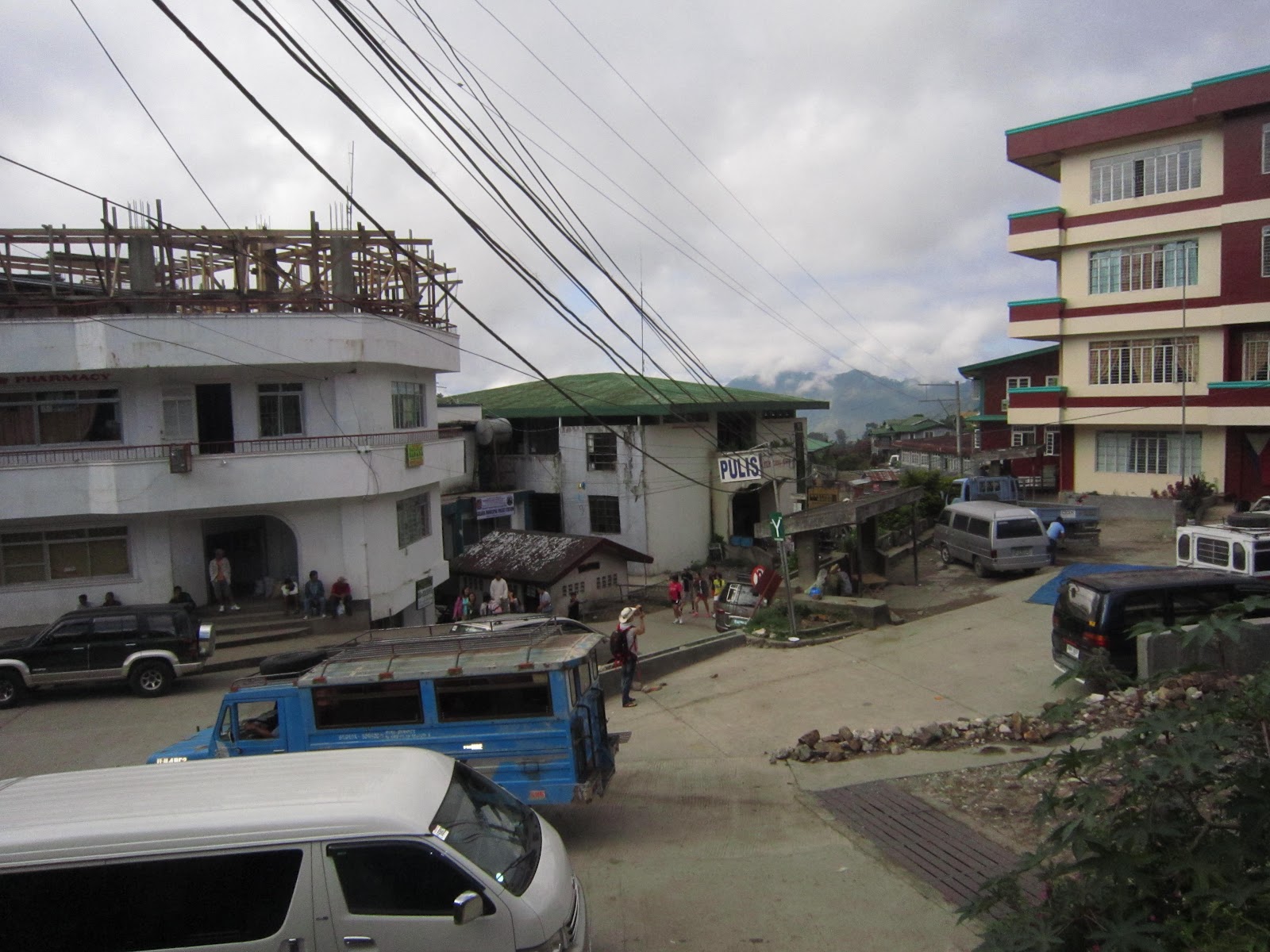
This is the center of Sagada. This is the Junction(Crossing) of Sagada where one gets down.  The road going down to the left(where the police station) is going top Bugang area, and the road on the right where the man is standing is going to Besao.


Restaurants and eateries are found along the main road


This is the St. Mary's Church of Sagada


Next to St. Mary's is the bus parking area where it waits for passengers going back to Baguio City.
Due to the rising popularity of Sagada as a tourist destination, transportation is becoming a problem.  People have to wait in line;  though buses are always on time.


The famous Sumaguing Cave.


The curtain. One of the view inside of Sumaguing cave.


Can you find the hanging coffins in the picture?  If you look straight just above the grasses below you'll see them.  This was an old traditional practice in Sagada.  Some prominent people are put high in this place, a hole is made through those stones and the coffin with the body is push in.


One can view this scenery at Ambasing.  That is where the hanging coffins are.
I found this image to be cute so I snapped a picture.  This two kids climbed up on the side of this mountain to get shelter from the rain.


If one happens to have a chance in visiting a wake, it is no surprise to see how meat is cooked.  This menu is called "Anger" or boiled meat.  Only salt was added but one could taste the real taste of meat.


Monday, June 25, 2012

Images On The Way To Sagada


Are you planning to visit Sagada? If you are, you might want to have some idea what to see on the way to Sagada. Here are some images I took in some of recent visits to where my ancestors were born.


This place is known as the Highest Point which is found in Sayangan, Atok, Benguet. Here is the place where travelers stop to relieve themselves. This was build at the later part of year 1990's during the time of President Fidel V. Ramos. A project by Capuyan Construction, and under the supervision of Mr. Henry Malidom.


A waiting shade at Highest Point


This is the common site you can see along the way. They said when you reached this point, it is like you reached the first level of heaven.


This is the entrance to Sagada Proper. Old houses made of galvanized iron and were built after world war 11 changing the traditional kugon-grass made houses.


This a common thing to see along Halsema road. Jeepneys or trucks are carrying their vegetable products to Baguio city.