Showing posts with label dap-ay. Show all posts

Wednesday, June 6, 2018

Earthquake Tips from the Elders of "Dap-ay" in Sagada


After bringing my little girl to her school room on their first day of classes, I saw this painting at the wall of their building which says, “During earthquake” at the top and below are figures and words to describe what to do, “Duck, Cover, Hold.”

I read it again, and again, and again. I feel there is something missing or wrong with it. While it is a good advice, it is not as good as what my father (Blessed be him) heard in the dap-ay of Sagada when they were kids. He kept repeating to us those advices when we were kids every time there was an episode of earthquake that our home.


Figure 1   Advice of the disaster experts during earthquake 

According to him, the elders were giving hints or advice to the young boys on how to react during calamities, and one of them is earthquake. In fact, the advice is applicable in all situations of dangers an individual will be facing including typhoons, fire, floods or any dangerous situations you’ll be ready how to deal with it with those simple advice from the elders of the dap-ay.

Experienced of many dangers and calamities, the elders of Sagada developed their own ways on how to survive through discussions at their dap-ays. And those wisdoms and knowledges were shared with the boys who came every night to sleep in the dap-ay through generations. That’s why when I saw the illustration outside my child’s school building, I can’t stop thinking if it is the best thing to do or not.


According to my father here are the things he learned from the elders of the dap-ay on how to react in cases of dangers:

1.   Be calm
In all kinds of dangers force yourself to be calm or composed. Never panic. Panic killed more people than the  danger itself.
In the aftermath of the 1990 earthquake, each time an aftershock occurs, some of the people who came to my
aunt’s home to sleep at night, used to run in a panic mode. And in the process, few of them sprained their ankles, some fell face down hurting their palms when trying to protect themselves from the fall, and others hurt their knees.

It was one of the situations when the words of my father reverberated in my ears. I repeated to them the advice of my father as he heard from the elders of the Sagada dap-ay. That since my aunt’s house was made of wood including its posts, and only four feet above the ground it was therefore a very safe place. There was very, very little chance to nothing for it to collapse. And if it collapses, it is not as dangerous as those houses and buildings which are made up of concrete. Since then, even the strongest aftershock did not make anyone of them run, although, the look of being worried were still in the faces of few.

But worry is alright according to my father as told by the elders of the dap-ay. Why? Because it makes you be ready in cases of worse scenarios that might happened. However, too much worry will make you like a disabled person. Your knees become weakened and could not even walk to your safety and you will not be able to think what to do in order to save yourself. And worst, you might affect the others, especially, when you start shouting at the top of your lungs.

2.  Be Alert 
When you are worried a little, it makes you more alert and be ready to spring into action. I had a boss in Israel who doesn’t want to hear when his children were telling him not to worry. He said, “If I did not worry enough, my family and their families are all now scrubbing floors just to make both ends meet.”

So, same thing when we are in the face of danger. Worry is a natural ingredient as gift from God because it makes us become alert, in this case, during earthquake. It makes us watch out for imminent dangers, like, falling objects, and panicking throng of people who might run you over, especially, when you’re on their way out to the exit.

3.  Be Smart 

Assess your location:
 a.   Are you inside of a building? Bungalow type of buildings, and houses made up of wood are at least safe. Being in the basement or first floor of a building are the most dangerous area to be in – get out to the nearest door or go up to the nearest stairs if quake is long and when you have the chance. Never follow a crowd, remember stampede killed more people than the danger itself.

b.   You’re in open place There’s no need to panic, unless the ground opens wide and swallow you, so, just be alert. But the best thing to do is to stay cool or sit down when you feel dizzy or you are losing balance.

Monday, January 21, 2013

The Dap-ay of Sagada


One of the things that are very interesting to see in Sagada are the Dap-ays.  However, it seems that tourists, especially the locals are not attracted to them because, probably, they just look at them as simply as little houses that have no remarkable things to learn about.

Conversely, I cannot blame the tourists if their attention is not drawn into those small houses in the middle of the villages, unless they have a very inspective nature about things unusual in a place.  Furthermore, the guides may not be talking about those little houses because they are only interested to showcase the natural beauty of Sagada which are already known outside like, the Sumaguing cave, Lumiang cave, the hanging coffins, and other beautiful naturally made spots. 

What is the dap-ay and what are things tourists should know about it?

A dap-ay is a dwelling build especially for unmarried boys. Every village are supposed to have a dap-ay. However, most are found in Demang which have seven, there are five in Dagdag, one in Ambassing, and One in Patay. According to the people whom I asked, the nearest dap-ay to their home is the dap-ay where they belong.  Each dap-ay has its own "Bishop" or an old man being respected by the village.

The Dap-ay has two divisions.  One is the outside or front-yard where a fire burns and serves as light until everyone goes inside the house to sleep.  Then early in the morning the fire is again rekindled to keep the people warm.  The floor is made up of large flat stones put much closed to each other for a size of about 8-10 feet across.  Around it are stones put up in upright position serving as backrests.   The other part of the dap-ay is the little house that serves as a sleeping room.  Only the boys sleep in the dap-ay.  


The dap-ay plays a very important role in the people of Sagada’s lives.   One of the role played, especially in the old days, was it serves as a learning place for the growing boys of the village. The elders went there at night to exchange stories about current events, or experiences they had, and what they perceive about the future, or opinion about a present unrelenting issue. The youths listening from those stories gained wisdom from them.  It is from the dap-ay that they are molded to become real matured men – men who are responsible, who will be ready to face the challenges of life.
 In the dap-ay, little boys also started to learn the skills of doing masahe(massage), gisgisto(slightly digging the thumbnails on the skin of the head), dagdagay(scratching the bottom of the foot using the ends of a pair of  sticks) and other techniques of making the body relaxed, or treat a lingering pain like backpain, headaches, and fatigue from the days’ works.

The dap-ay also serves as a courthouse of the village.  When there are issues or problems in the village, the elders will meet at the dap-ay to talk about what to do in solving the problem. 

Are dap-ays found only in Sagada?

 Dap-ays are also found in other parts of the cordillera.  But these days, the looks are already different from the old architecture designs.  Before, the roof of the house was covered with cogon and the walls were made up of stones, while today the roof is made up of galvanized irons.

Figure 1.  The dap-ay of Demang, Sagada 


This is the modern look of dap-ays today. Its roof is made up of galvanized iron


It is a pity that as the economic level of the people upgraded; the boys are no longer going into the dap-ay to sleep at night.  They no longer hear stories about their past histories.  The youth of today are no longer knowledgeable about their roots, and do not know the traditional practices, and culture of their forefathers.   


Figure 2. The frontyard of the dap-ay 


To know more about the interesting stories of the dap-ay, I suggest that tourists should ask their guides to bring them to one of the dap-ays and have them tell them about the significance of this into the life and culture of the people.

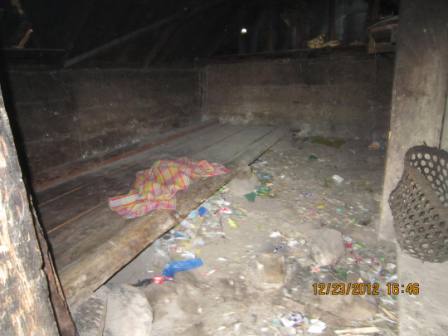
Figure  3.  Inside look of the dap-ay                                                               


The inside indicates that the place is not being used very much today.  There is only one blanket, no signs of bonfire for a long time, and the place is filthy.


Figure 4.  Pikong dap-ay(front view)                                                                                                         


Figure 5. Pikong dap-ay(backview)